


The Excitement of Snow Rider
North Augusta, SC, Hoa Kỳ
Organizer (1)
- Organized by
-
-

Five Perspectives on A380 Alloy in Die Casting
-
Five Perspectives on A380 Alloy in Die Casting
A380 aluminum die casting has become one of the most widely used material–process combinations in modern manufacturing, and for good reason. The alloy’s balance of strength, castability, and cost efficiency makes it a quiet workhorse behind countless products we rely on daily. What fascinates me most about A380 aluminum is how it manages to satisfy such a broad range of engineering demands without drawing much attention to itself. It’s not glamorous, but it is indispensable.To get more news about a380 aluminum die cast, you can visit jcproto.com official website.
From an engineering standpoint, A380 stands out because it solves multiple problems at once. It offers high fluidity, which means it fills complex molds with ease, allowing manufacturers to create intricate geometries that would be difficult or expensive with other materials. At the same time, it maintains good mechanical strength and excellent dimensional stability. This combination is rare. Many alloys excel in one area but fall short in another. A380’s ability to balance these traits is what makes it so widely adopted in die casting.
Another angle worth exploring is the economic one. Manufacturers often choose A380 not only because it performs well but because it keeps production costs under control. The alloy’s high castability reduces scrap rates and shortens cycle times. In industries where margins are tight—automotive, consumer electronics, small appliances—these savings matter. I’ve spoken with engineers who say that switching to A380 from a less castable alloy can feel like “unlocking” a production line. Suddenly, defects drop, molds last longer, and throughput increases. It’s a reminder that material choice isn’t just a technical decision; it’s a business strategy.
From a sustainability perspective, A380 aluminum also has a compelling story. Aluminum is highly recyclable, and A380 in particular is often produced using a significant percentage of recycled content. This reduces energy consumption and environmental impact compared to primary aluminum production. In a world increasingly focused on responsible manufacturing, this matters. I’ve always believed that sustainability becomes meaningful when it aligns with practicality, and A380 is a perfect example of that alignment. Companies don’t have to sacrifice performance or cost to make a greener choice.
The alloy’s versatility is another reason it continues to dominate. A380 die cast parts appear in automotive transmission housings, engine brackets, electronic enclosures, power tool bodies, and even furniture components. Each of these applications demands something slightly different—thermal conductivity, corrosion resistance, structural integrity—and A380 manages to meet those demands without requiring major compromises. When I first learned how many everyday objects rely on this alloy, I was genuinely surprised. It’s one of those materials that quietly shapes the world around us.
On a more personal level, what I appreciate most about A380 aluminum die casting is the sense of reliability it brings to engineering projects. When designers choose A380, they’re choosing predictability. They know how it behaves in the mold, how it responds to machining, how it performs under stress. That predictability frees them to focus on innovation rather than troubleshooting. In my view, the best materials are the ones that let creativity flourish by removing unnecessary obstacles.
Of course, A380 isn’t perfect. It has lower ductility compared to some other aluminum alloys, and it’s not ideal for applications requiring extreme toughness or weldability. But even these limitations contribute to its identity. A380 is a specialist in efficiency and precision, not a universal solution. Understanding where it excels—and where it doesn’t—is part of what makes working with it so interesting.
Looking ahead, I believe A380 aluminum die casting will remain a cornerstone of manufacturing, even as new materials and technologies emerge. Additive manufacturing, for example, is expanding rapidly, but it hasn’t replaced the speed and scalability of die casting. Instead, the two processes increasingly complement each other. I’ve seen companies use 3D printing to prototype complex shapes and then transition to A380 die casting for mass production. This hybrid approach blends creativity with practicality, and A380 fits perfectly into that workflow.
In many ways, A380 aluminum die casting represents the essence of modern engineering: a blend of performance, efficiency, and adaptability. It’s not the flashiest material, but it’s one of the most dependable. And in manufacturing, dependability is often what drives progress.
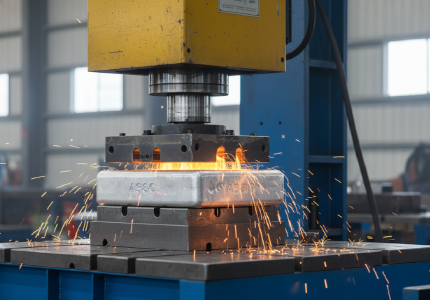
jcproto.com
A380 Aluminum Die Cast: Properties, Benefits, and Limits
Stop guessing your alloy specs. Discover why A380 aluminum die cast is the global standard for balancing thermal conductivity, strength, and unit cost.
Sorry, there were no replies found.
Log in to reply.