


The Excitement of Snow Rider
North Augusta, SC, Hoa Kỳ
Organizer (1)
- Organized by
-
-

Why Sand Casting and Die Casting Matter More Than You Think
-
Why Sand Casting and Die Casting Matter More Than You Think
Sand casting and die casting are often mentioned in the same breath, yet they represent two very different philosophies of manufacturing. One is rooted in ancient, almost artisanal practice; the other is a product of industrial precision. When comparing sand casting and die casting, the contrast goes far beyond the molds they use. It’s a clash of flexibility versus accuracy, tradition versus efficiency, and cost versus consistency. After years of reading, observing workshops, and talking with engineers, I’ve come to appreciate how each method has its own personality—its own strengths and quirks that shape the final product.To get more news about sand casting vs die casting process, you can visit jcproto.com official website.
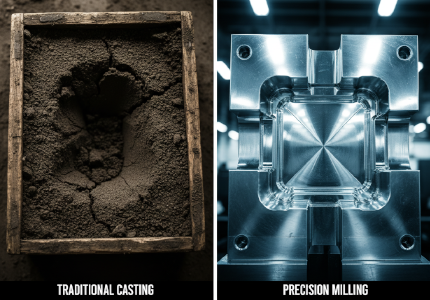
The Nature of the Mold: Temporary vs. Permanent
At the heart of the difference is the mold itself. Sand molds are temporary, created fresh for every casting. They’re made from a mixture of sand, clay, and water, packed around a pattern. This gives sand casting a kind of earthy, hands-on feel. You can almost sense the craftsperson’s touch in the final product.Die casting, on the other hand, uses permanent metal molds—precision-machined dies that can withstand thousands of cycles. The permanence of the die means the process is inherently more controlled. Every part looks nearly identical, with crisp edges and smooth surfaces. It’s the difference between sculpting in clay and stamping with a steel press.
Material Flexibility and Limitations
One of the reasons sand casting has survived for thousands of years is its incredible versatility. You can cast almost any metal: iron, steel, bronze, aluminum—you name it. This makes sand casting the go-to choice for heavy machinery, large components, and custom shapes.Die casting is more selective. Because the molten metal is injected under high pressure, only low-melting-point alloys—like aluminum, zinc, and magnesium—are suitable. But within that narrower range, die casting excels. The resulting parts are dense, strong, and dimensionally consistent.
Surface Finish and Precision
If you’ve ever held a die-cast part, you’ve probably noticed how smooth and refined it feels. That’s because die casting produces excellent surface finishes and tight tolerances. Engineers love it for components that must fit together perfectly—automotive housings, electronics enclosures, and intricate mechanical parts.Sand casting, while capable of good results, generally produces rougher surfaces and requires more machining afterward. But here’s the nuance: for large industrial parts, the slight roughness doesn’t matter. A massive pump housing or engine block doesn’t need jewelry-level polish.
Cost, Scale, and Practicality
This is where the trade-offs become most obvious. Sand casting is inexpensive to start. The tooling is simple, patterns are easy to modify, and small production runs are economical. If you need ten custom parts, sand casting is your friend.Die casting is the opposite. The upfront cost of the die can be enormous—sometimes tens of thousands of dollars. But once the die exists, the cost per part drops dramatically. For high-volume production, die casting becomes unbeatable.
Real-World Applications: Where Each Method Shines
In my experience, the best way to understand these processes is to look at where they naturally fit. Sand casting dominates industries like heavy equipment, energy, and transportation—places where size and strength matter more than cosmetic perfection.Die casting thrives in consumer products, automotive components, and electronics. When you need thousands or millions of identical parts, nothing beats the speed and precision of a die-casting machine.
A Personal Take: Why Both Methods Still Matter
If I had to choose one process as “better,” I wouldn’t. They’re too different, and each fills a unique niche. Sand casting appeals to me because of its adaptability and almost artistic nature. There’s something satisfying about seeing molten metal poured into a mold made of earth.Die casting, however, impresses me with its efficiency and engineering elegance. Watching a die-casting machine operate feels like witnessing the heartbeat of modern manufacturing—fast, precise, and relentless.
What I’ve learned is that the smartest manufacturers don’t pick one method and ignore the other. They choose based on the part’s purpose, the production volume, and the required performance. In a way, sand casting and die casting are complementary tools in the same toolbox.
jcproto.com
Sand Casting vs Die Casting Process: Which Saves More Money?
Losing money on secondary CNC machining because your metal parts are too rough? Compare the sand casting vs die casting process to scale production efficiently.

Log in to reply.