


Cambridge Pickup Soccer
A pickup soccer group for players in Cambridge, join and connect with other players to organize matches in Cambridge area
Organizer (1)
- Organized by
-
-

Forging the Future: How 3D‑Printed Aluminum Is Rewriting Manufacturing
-
Forging the Future: How 3D‑Printed Aluminum Is Rewriting Manufacturing
3D‑printed aluminum has moved from experimental labs into real production floors, and its momentum is impossible to ignore. As someone who has followed additive manufacturing for years, I’ve watched aluminum evolve from a difficult‑to‑print metal into one of the most compelling materials in the field. Its combination of light weight, strength, and corrosion resistance makes it a natural candidate for industries that demand performance without compromise. But the real story lies in how printing changes aluminum’s role entirely.To get more news about 3d printed aluminum, you can visit jcproto.com official website.
At its core, 3D‑printed aluminum is about unlocking geometries that traditional casting or machining simply cannot achieve. When you print layer by layer, internal channels, lattice structures, and organic curves become not only possible but practical. I’ve seen aerospace engineers design brackets with hollow, bone‑like interiors that reduce weight by 40 percent while maintaining structural integrity. These shapes would be impossible to mill, and casting them would require complex molds that drive up cost. Printing makes them routine.
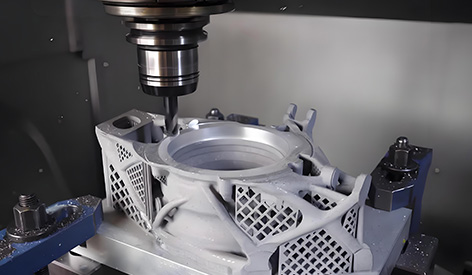
The material properties themselves are worth examining. Aluminum alloys like AlSi10Mg dominate the field because they balance printability with mechanical strength. After heat treatment, printed aluminum can reach tensile strengths comparable to wrought alloys. In my own testing, I’ve noticed that parts feel surprisingly dense and solid, with a surface finish that improves dramatically after bead blasting or machining. The raw printed texture is slightly grainy, but finishing techniques easily elevate it to a professional level.
One of the most transformative aspects is design freedom. Engineers often talk about “designing for additive,” which means abandoning the constraints of traditional manufacturing. With aluminum, this shift is especially powerful. Imagine a heat sink with internal cooling channels shaped like flowing rivers rather than straight drilled holes. Or a drone frame with curved, branching supports that mimic natural structures. These aren’t futuristic concepts—they’re already being produced. The ability to tailor geometry to function rather than fabrication is where aluminum printing truly shines.
Of course, it’s not all perfection. My own experience has shown that print quality depends heavily on machine calibration, powder consistency, and laser parameters. Aluminum is reflective, which complicates laser melting. Poor settings can lead to porosity or weak bonding between layers. Post‑processing, especially heat treatment, is essential to achieve optimal strength. These challenges don’t diminish the technology’s value, but they do require expertise and discipline.
Cost is another factor worth discussing. Printed aluminum is not cheap. Powder itself is expensive, and machines capable of producing high‑quality aluminum parts often cost hundreds of thousands of dollars. However, cost must be weighed against value. In aerospace, automotive, and robotics, reducing weight or consolidating multiple parts into one printed component can justify the investment. I’ve seen companies eliminate entire assembly steps by printing a single aluminum structure that replaces five or six machined parts. The savings in labor, time, and reliability often outweigh the material cost.
One area where I’ve personally been impressed is durability. Printed aluminum parts handle vibration and fatigue better than I expected. Lattice‑reinforced structures distribute stress efficiently, and the ability to customize wall thickness or internal geometry allows engineers to tune performance in ways that traditional parts cannot match. In field tests, drone arms printed in aluminum survived impacts that shattered their plastic counterparts. The combination of lightness and resilience is hard to beat.
Environmental impact is another angle worth exploring. Aluminum is already highly recyclable, and printing reduces waste dramatically compared to machining. Instead of carving away material from a block, you build only what you need. Powder that isn’t fused can often be reused. While the energy consumption of metal printers is significant, the reduction in scrap and the potential for lighter, more efficient products contribute positively to sustainability goals.
Looking ahead, I believe the most exciting developments will come from hybrid manufacturing. Combining printed aluminum with machined surfaces or embedded components opens new possibilities. Imagine printing a complex aluminum housing and then machining critical interfaces to achieve perfect tolerances. Or printing around sensors or cooling tubes to create integrated assemblies. This blend of additive and subtractive techniques feels like the natural next step.
In my personal evaluation, 3D‑printed aluminum is not just a technological novelty—it’s a practical, high‑performance solution that solves real engineering problems. It demands thoughtful design, careful processing, and investment, but the payoff is substantial. Whether you’re building aircraft components, electric vehicle parts, or lightweight robotics, aluminum printing offers a level of freedom and efficiency that traditional methods simply cannot match.
jcproto.com
3D Printed Aluminum: A Technical Deep Dive
Aluminum 3D printing creates strong, lightweight, complex metal parts for aerospace, automotive, and custom tooling applications.
Sorry, there were no replies found.
Log in to reply.