


Cambridge Pickup Soccer
A pickup soccer group for players in Cambridge, join and connect with other players to organize matches in Cambridge area
Organizer (1)
- Organized by
-
-

From Molten Metal to Solid Form: The Art of Gravity Die Casting
-
From Molten Metal to Solid Form: The Art of Gravity Die Casting
Gravity die casting is one of those manufacturing processes that seems deceptively simple at first glance: pour molten metal into a mold and let gravity do the work. But the more time you spend around foundries, the more you realize how much craftsmanship, engineering judgment, and subtle decision‑making go into getting a flawless casting. The process sits at the intersection of tradition and precision, and that’s part of what makes it fascinating.To get more news about gravity die casting process, you can visit jcproto.com official website.
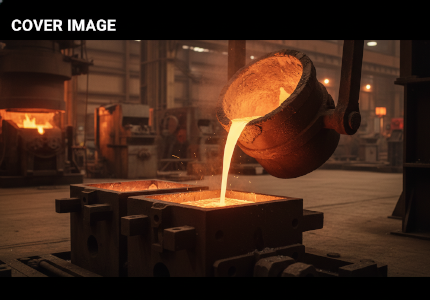
At its core, gravity die casting uses a reusable metal mold—usually steel or cast iron—into which molten aluminum, magnesium, or other non‑ferrous alloys are poured. Unlike high‑pressure die casting, there’s no mechanical force pushing the metal into the cavity. Gravity alone fills the mold. This slower, more controlled filling creates a different internal structure in the final part, often with fewer trapped gases and better mechanical properties.
What Makes Gravity Die Casting Distinct
The most defining feature of the process is the balance between control and simplicity. Because the metal flows naturally, the turbulence is lower, which reduces porosity. That’s why industries like automotive and aerospace still rely on gravity die casting for components that need strength and reliability—think suspension parts, brackets, or even certain engine components.But the simplicity is deceptive. The mold design must account for metal flow, cooling rates, venting, and shrinkage. A well‑designed mold can make the difference between a clean casting and one riddled with defects. I’ve seen experienced engineers debate for hours over the placement of a single feeder, and they’re usually right to do so.
The Process Step by Step
Mold Preparation — Before any metal is poured, the mold is preheated to a specific temperature. This prevents thermal shock and helps the metal flow smoothly. A coating is often applied to control heat transfer and ease part removal.Metal Melting — Alloys are melted in a furnace and held at a precise temperature. Even a small deviation can affect fluidity and final strength.
Pouring — Operators pour the molten metal manually or with a ladle. This is where skill matters: too fast and turbulence increases; too slow and the metal may solidify prematurely.
Solidification — Gravity die casting cools more slowly than high‑pressure casting, which often results in a denser microstructure. Cooling channels or external chill blocks may be used to control the process.
Ejection and Finishing — Once solid, the part is removed, trimmed, and inspected. Heat treatment may follow if higher strength is required.
Where Gravity Die Casting Excels
From my perspective, the biggest advantage is structural integrity. Parts made this way tend to have better fatigue resistance because the metal cools uniformly and with less internal stress. For industries where safety is non‑negotiable, that matters.Another strength is dimensional consistency. Because the molds are rigid and reusable, manufacturers can achieve tighter tolerances than with sand casting. This makes gravity die casting ideal for medium‑volume production where precision is important but the cost of high‑pressure die casting isn’t justified.
Finally, the process is environmentally friendlier than many alternatives. Reusable molds reduce waste, and the slower filling reduces scrap rates. In an era where sustainability is becoming a competitive advantage, this is no small thing.
The Limitations No One Should Ignore
Of course, gravity die casting isn’t perfect. The slower filling means it’s not suitable for extremely thin‑walled parts. If you need razor‑thin geometries or ultra‑high production volumes, high‑pressure die casting or injection molding will outperform it.There’s also the matter of initial tooling cost. Steel molds aren’t cheap, and while they last a long time, the upfront investment can be a barrier for small manufacturers. I’ve seen startups hesitate at the price tag, even though the long‑term economics often work out in their favor.
And because the process relies on gravity, design freedom is somewhat limited. Complex internal channels or undercuts require cores or secondary machining, which adds cost and time.
Why the Process Still Matters Today
Despite newer technologies like additive manufacturing gaining attention, gravity die casting remains relevant because it hits a sweet spot: strong parts, good surface finish, reasonable cost, and reliable repeatability. It’s a process that rewards thoughtful engineering and skilled craftsmanship, and in my view, that’s part of its enduring appeal.Manufacturing isn’t just about speed or automation. Sometimes the best results come from understanding how molten metal behaves when left to flow naturally. Gravity die casting embraces that simplicity while still delivering industrial‑grade performance.
jcproto.com
Mastering the Gravity Die Casting Process for Solid Metal Parts
Stuck between messy sand molds and expensive high-pressure tooling? Discover how the gravity die casting process saves money on medium-volume metal hardware.
Sorry, there were no replies found.
Log in to reply.