


Cambridge Pickup Soccer
A pickup soccer group for players in Cambridge, join and connect with other players to organize matches in Cambridge area
Organizer (1)
- Organized by
-
-

Riding the Divine Boat: Reflections on China’s Shenzhou‑20 Journey
-
Riding the Divine Boat: Reflections on China’s Shenzhou‑20 Journey
Shenzhou‑20 stands out as one of the most eventful and instructive missions in China’s expanding human spaceflight program. Launched on April 24, 2025, aboard a Long March 2F rocket from the Jiuquan Satellite Launch Center, the spacecraft carried three taikonauts—Chen Dong, Chen Zhongrui, and Wang Jie—on what was intended to be a routine six‑month rotation aboard the Tiangong space station. To get more news about shenzhou-20, you can visit citynewsservice.cn official website.
From the outset, the mission symbolized China’s growing confidence in long‑duration space operations. The crew docked with the Tianhe core module the same day, relieving the Shenzhou‑19 team and beginning a period of scientific work, maintenance, and spacewalks. Their tasks included installing debris‑shielding equipment, retrieving external instruments, and conducting experiments that ranged from materials science to human physiology.
What makes Shenzhou‑20 particularly compelling is not only what went according to plan, but what didn’t.
A Mission Interrupted: The Space Debris Incident
In early November 2025, mission controllers detected signs that the spacecraft may have been struck by a small piece of space debris—an increasingly common hazard in low Earth orbit. The suspected impact raised concerns about the integrity of the return capsule, especially its thermal protection and parachute deployment systems, both essential for a safe reentry.This moment transformed Shenzhou‑20 from a routine rotation into a test of China’s emergency response capabilities in space. Engineers initiated comprehensive simulations, safety assessments, and joint system tests to determine whether the spacecraft could still be used for crew return.
As someone who follows human spaceflight closely, I found this episode revealing. It demonstrated how space agencies—whether NASA, ESA, or CMSA—must constantly adapt to the unpredictable environment of orbit. Space debris is not just an abstract concern; it is a real and growing threat that can jeopardize missions costing billions of dollars and involving human lives.
A Safe Return—But Not in Their Own Ship
Ultimately, the risk was deemed too high. On November 14, 2025, the Shenzhou‑20 crew returned to Earth aboard the newly arrived Shenzhou‑21 spacecraft, which had docked with Tiangong on October 31.This unusual crew‑swap return maneuver underscored the flexibility built into China’s space station operations. It also highlighted the importance of overlapping crew rotations—a practice pioneered by the International Space Station and now adopted by Tiangong—to ensure redundancy and safety.
Meanwhile, the Shenzhou‑20 spacecraft remained docked for further analysis. Astronauts from Shenzhou‑21 even conducted close‑up inspections of the damaged window using high‑definition cameras during a December 9 spacewalk, part of a broader effort to understand the impact and prepare the capsule for an unmanned return.
The Uncrewed Journey Home
On January 19, 2026, after 270 days in orbit, Shenzhou‑20 finally returned to Earth—without a crew. The capsule touched down safely in Inner Mongolia, its structure intact and its internal equipment in good condition.This successful uncrewed landing was more than a technical footnote. It validated the spacecraft’s ability to remain docked for nine months—longer than originally planned—and demonstrated that even after a suspected debris strike, the vehicle could be stabilized, repaired, and returned safely. For China’s space program, this was a quiet but meaningful victory.
Life Aboard Tiangong: A Human Perspective
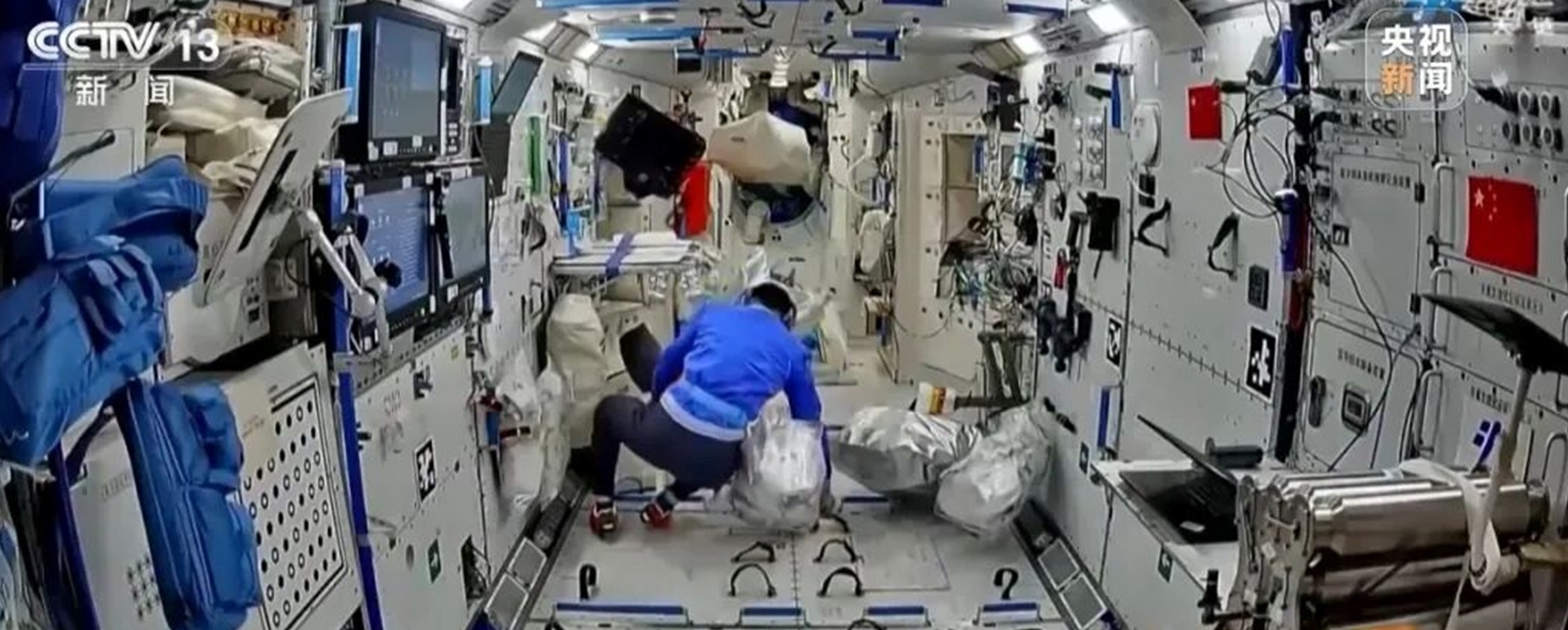
Beyond the technical milestones, Shenzhou‑20 also offered glimpses into the daily life of taikonauts. Videos released by state media showed the crews of Shenzhou‑20 and Shenzhou‑21 sharing meals—including a memorable moment involving “barbecued” chicken wings floating in microgravity.These small details matter. They remind us that spaceflight is not only about engineering triumphs but also about human adaptability, camaraderie, and the ability to find normalcy in an environment where nothing is normal.
If anything, these scenes made Tiangong feel less like a distant orbital laboratory and more like a place where people genuinely live and work.
What Shenzhou‑20 Means for the Future
In my view, Shenzhou‑20 represents a turning point for China’s human spaceflight program. Not because everything went smoothly, but because it didn’t—and the program still succeeded.Three key lessons stand out:
Operational resilience: The ability to adjust mission plans, activate emergency procedures, and coordinate overlapping crews proved essential.
Growing technical maturity: The safe uncrewed return after months of analysis and repair shows a high level of engineering competence.
Human factors: The mission highlighted the importance of crew well‑being, teamwork, and adaptability in long‑duration spaceflight.
As China prepares for future missions—including more complex experiments, larger station modules, and eventually crewed lunar flights—Shenzhou‑20 will likely be remembered as a mission that tested the system and found it strong.
citynewsservice.cn
How China Responded to Shenzhou-20's Window Crack: Launching Its First Emergency Space Mission
A small crack found on the Shenzhou-20 forced China to delay a crew's homecoming and carry out its first emergency launch to secure a backup spacecraft for the space station.
Sorry, there were no replies found.
Log in to reply.